
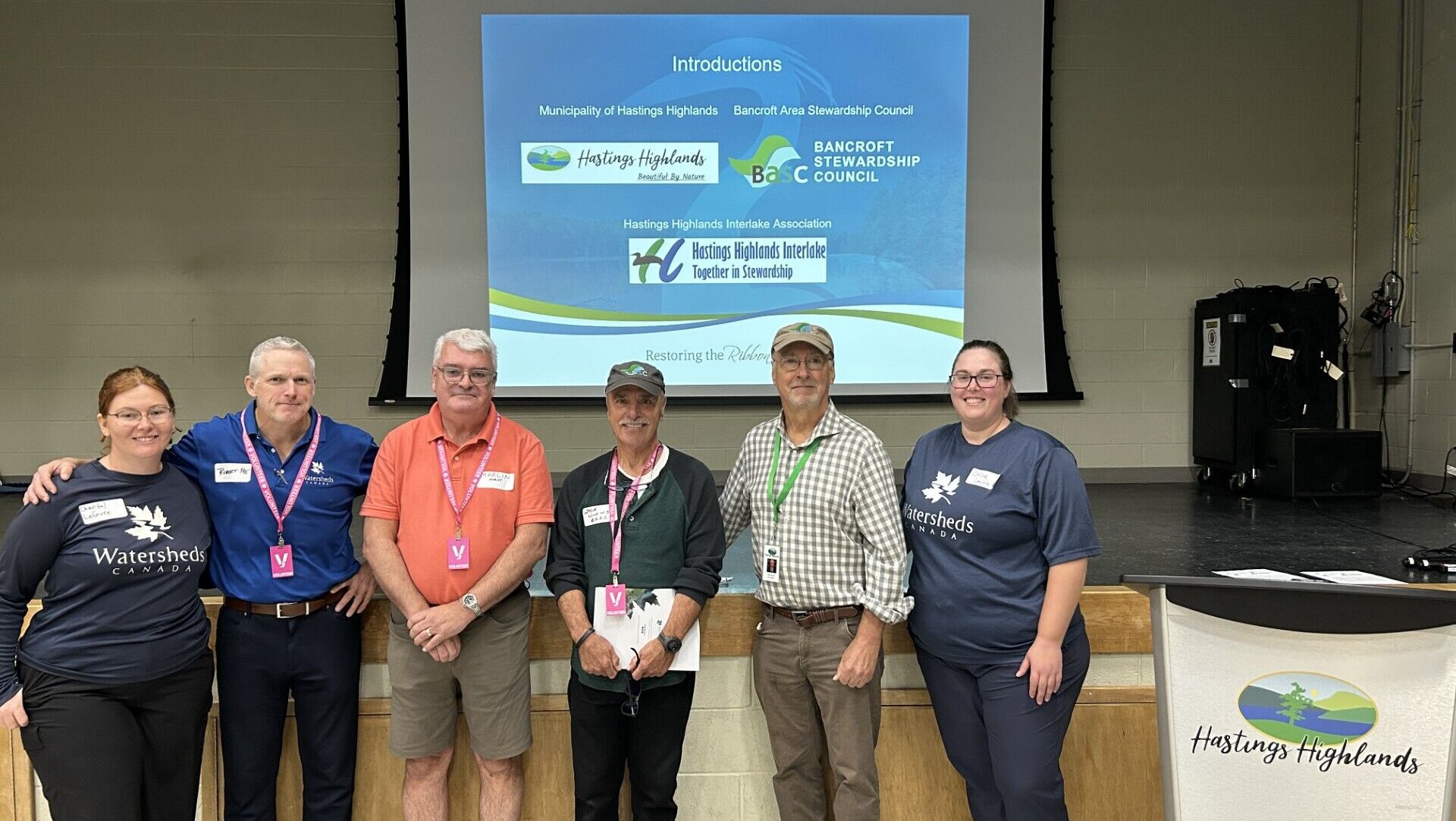

Hastings Highlands is helping local property owners increase the health of their lakefronts.
The municipality hosted a Design Your Shoreline workshop for lakefront property owners this past weekend, in partnership with Watersheds Canada, Hastings Highlands Interlake Group and the Bancroft Area Stewardship Council.
The workshop featured a presentation by Chloe Lajoie and Chantal Lefevre from Watersheds Canada about their Natural Edge program.
Through the program, Watersheds Canada works with lakefront property owners on naturalizing their shorelines.
Lajoie said 78 per cent of properties do not meet the minimum criteria for sustaining lake health. To maintain a healthy lake, at least 75 per cent of the shoreline needs to be natural.
Lajoie said planting native species around the shoreline, which Watersheds Canada helps property owners do through the Natural Edge program, has many benefits. The plants act as a filter to reduce algae blooms, while also regulating water temperature and deterring geese.
Lajoie showed two videos comparing a part of a lake with an unnatural shoreline and another part of the same lake with a natural shoreline. The natural shoreline allowed for a whole ecosystem of fish and plant species to grow underwater, while the unnatural shoreline’s water was barren.
Leonard and Liz Cserhati have a cottage on Kamaniskeg Lake.
They attended the workshop to learn more about what they could do with their property, particularly to mitigate algae blooms. They said they’ve been trying to keep their shoreline natural, even though other property owners might not be.
“This is environmentally friendly, even though it might not look as nice as a completely grassed-in area, but it’s certainly much better for the environment, and for all the species that live around it,” Leonard said.
“I’m going to change a part down by the lake that I was going to put a firepit in, now I’m going to put the plants that they gave us today, I’m going to put them in there, because it’s right by the waterfront,” Liz said.
Workshop attendees took home eastern white cedars and tamaracks to plant on their properties, to get started with naturalizing their shorelines.
Watersheds Canada also has a native plant database that is free for anyone to use who is interested in naturalizing their shoreline. To get started, they recommend first deciding what parts of your property you want to plant on, then assessing your site’s conditions and deciding what plants to bring in. More information is available on the Natural Edge website.