
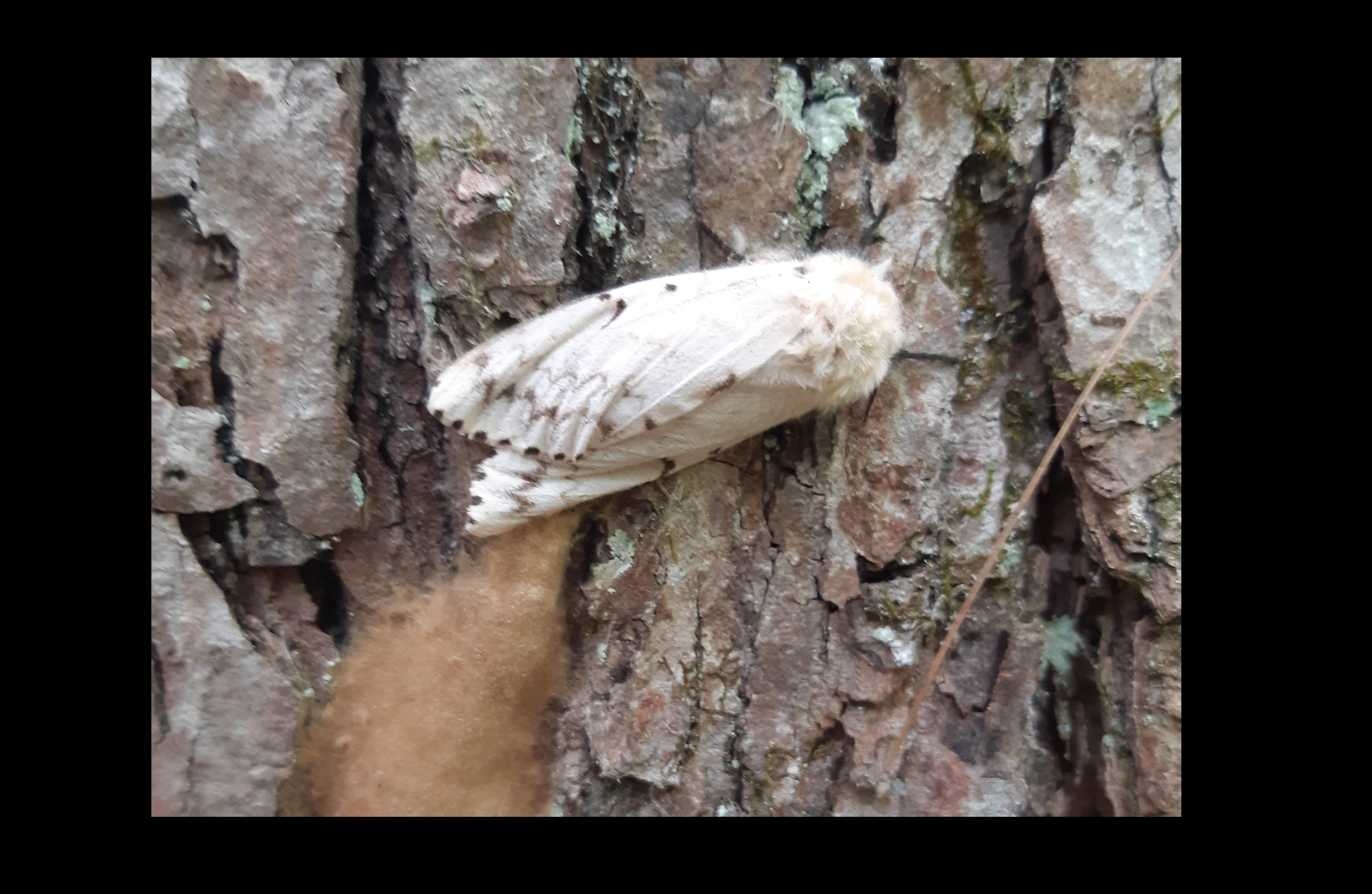

There’s been a rash of gypsy moth sightings in northwestern cottage country this summer.
According to a live map of invasive species sightings in Ontario, maintained by the Canada/Ontario Invasive Species Centre in Peterborough, there have been two sightings in Renfrew County in Burnstown and Deep River.
Kate Powell, a terrestrial specialist outreach liaison with the Ontario Federation of Anglers and Hunters, the best thing people can do is to document the sighting, and confirm with the authorities that it is the moth.
The insect is native to Europe and Asia and has been severely weakening trees across North America, after being introduced near Boston in the late 1860s.
“Despite the successful use of insect predators, as well as fungal and viral controls, gypsy moth populations do occasionally reach outbreak levels and continue to expand their range,” read a provincial information bulletin on the creature. “Gypsy moth caterpillars defoliate host trees, mostly hardwood species, such as: oak, birch, poplar, willow, maple and others. During outbreak years, nearly all broadleaf trees may be completely defoliated, caterpillars appear everywhere, and “frass” (caterpillar droppings) appear to rain from the trees,” the bulletin continues. “Adult gypsy moths are only seen in mid-summer when temperatures are above freezing. This species is known to infest trees in woodland or suburban areas.”
The province recommends the following:
- Learn how to identify gypsy moth during its various life stages.
- Egg masses can be easily controlled by removing and burning or soaking with soap and water mixture.
- A band of either burlap or other cloth product wrapped around the trunk will provide a place for caterpillars to hide during the heat of the day. Check these bands regularly and scrape caterpillars into a container of soapy water.
- Keep your trees healthy and better able to ward off attacks. In urban areas, water trees during dry spells and protect their root zone. In natural areas, good forestry practices will ensure healthier trees that are better able to withstand stresses such as defoliation.
- Report sightings to the toll-free Invading Species Hotline at 1-800-563-7711 or email info@invadingspecies.com.
A map of the insect’s current range and reported sightings can be found online.
Written by James Wood